
Common Rail solenoid injector validation should tell the technician more than the final quantity collected in a measuring vessel. DIT31 is designed to observe the injection event itself, combining hydraulic measurement with synchronized electronic actuator control.

The traditional volumetric approach
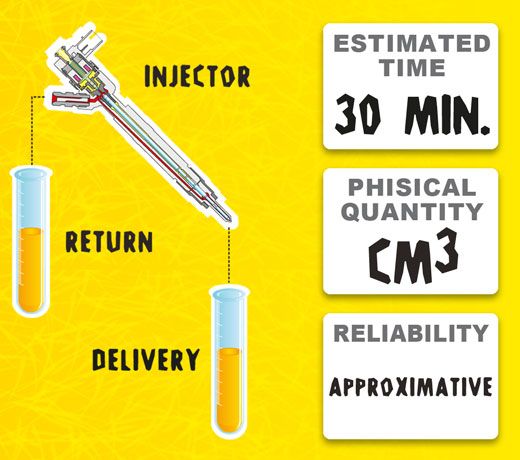
A widely used Common Rail test method collects the injected test fluid in a graduated vessel over a known number of injection events. This provides a final volume that can be compared with a reference value.
The DIT31 event-based approach
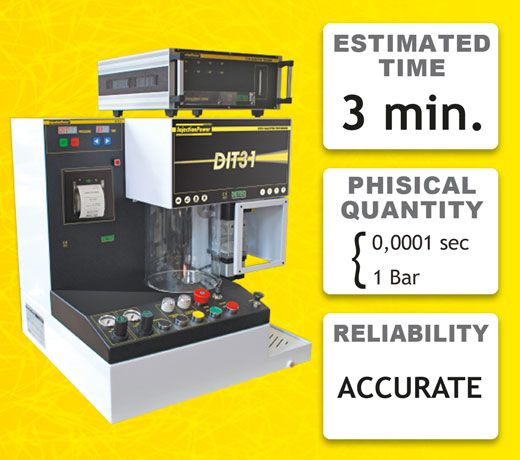
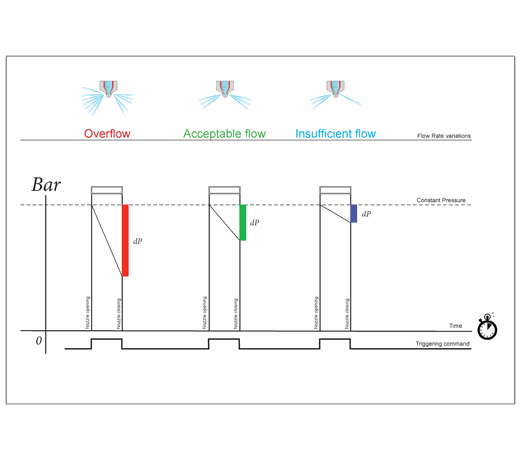
DIT31 adds another level of information by separating the hydraulic event into two fundamental parameters: the time between nozzle opening and closing and the pressure variation during that interval. Together they help characterize what happens during the injection event rather than only what is collected afterwards.
Parameters that support diagnosis
Injection time
Injection time is the interval between nozzle opening and closing. It provides a direct view of the duration of the hydraulic event.
Return and internal leakage
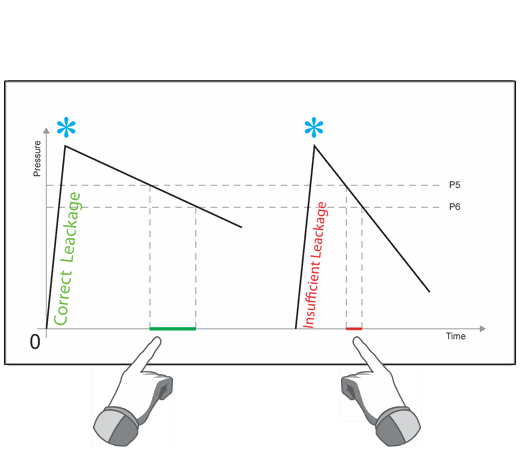
After pressurization, stopping pressure generation allows the pressure decay to be observed. The rate of decay is related to internal return and leakage behaviour and can therefore help compare injector condition.
Opening delay
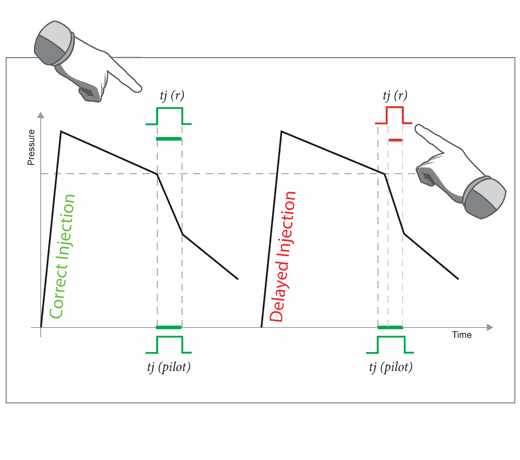
Opening delay measures the time between the electrical excitation command and the mechanical response of the injector. This makes actuator response part of the validation rather than treating electrical command and hydraulic behaviour as separate worlds.

Pressure variation during injection
DIT31 evaluates the pressure difference between nozzle opening and closing. Combined with injection time, this helps characterize delivered quantity and distinguish different hydraulic behaviours, including restriction or wear.
Synchronized solenoid actuator control
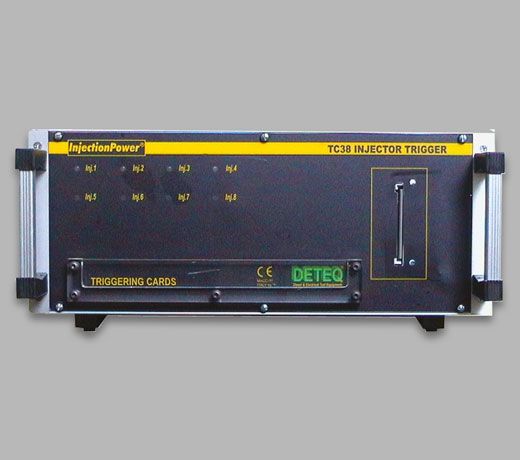
The electromagnetic actuator is controlled by the external TC38, synchronized with DIT31. Depending on the injector application and connection, the TC38 uses the appropriate excitation card and cable so that the electrical command is integrated with the hydraulic validation sequence.
A consistent validation methodology
Different injector technologies require different interfaces and operating conditions. The objective is not to pretend they are all the same, but to bring them into a consistent methodology that produces reliable and comparable figures.
Explore DIT31, diesel injector testing, and the progression from injector testing to an Injector Clinic.
How to Validate Common Rail Solenoid Injectors